
How to Pitch to Spotify Playlists Before Release
To pitch an unreleased song to Spotify’s playlist editors, use Spotify for Artists after your distributor has delivered the release. Choose the song under Music and Upcoming, complete the pitch, and submit it before release day. The pitch gives editors context for the recording; it does not reserve a playlist position.
The preparation matters as much as finding the form. A useful submission explains what someone will hear and why the song belongs in its musical setting. You do not need to describe it as your greatest work. You need accurate details that help another person understand it.
Separate delivery time from pitching time
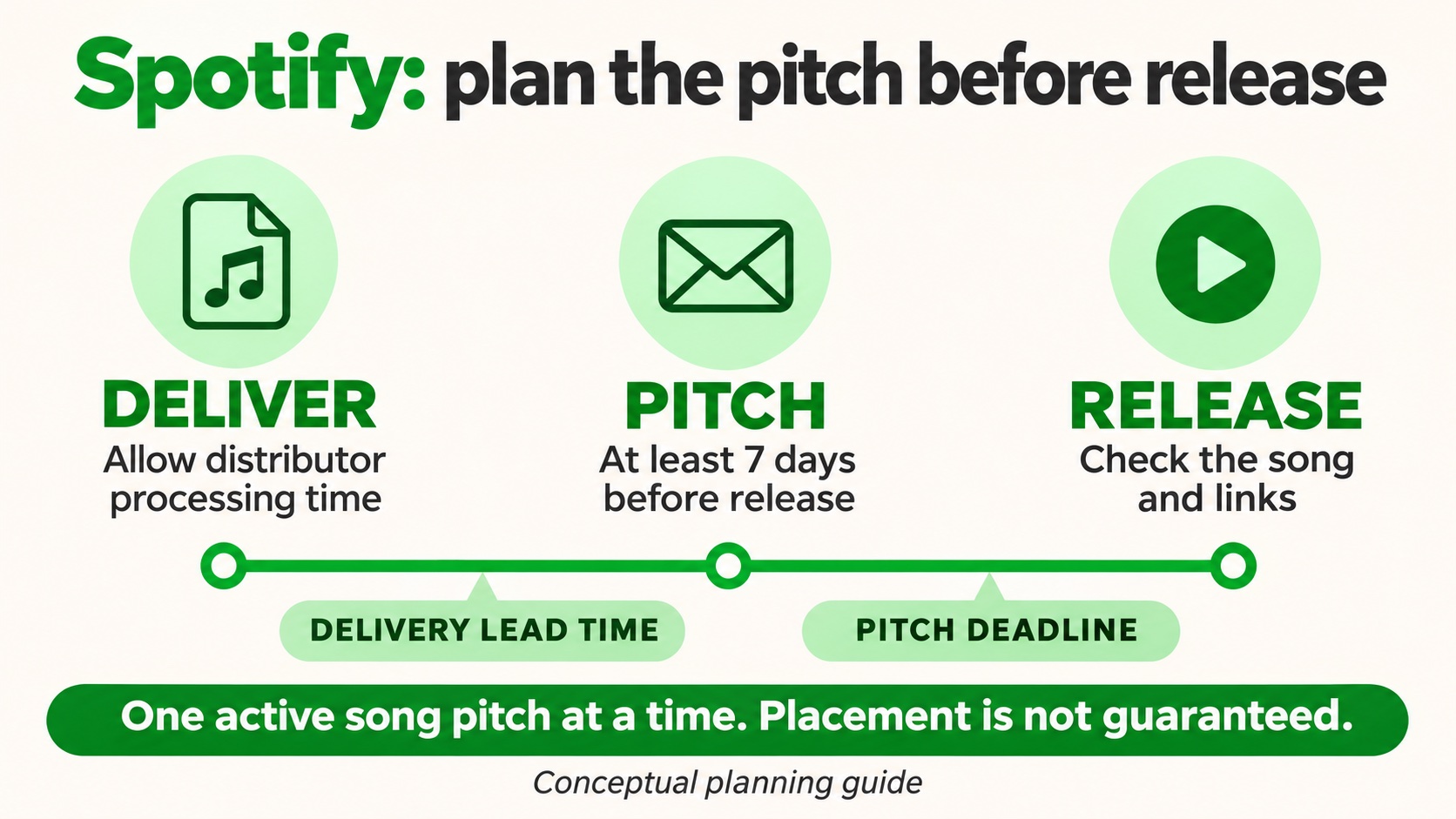
Delivery and pitching are two different steps. Your distributor first needs to send the recording to Spotify. Once it appears among your upcoming releases, an Admin or Editor on your Spotify for Artists team can prepare the pitch. Allow time to resolve missing releases or incorrect details before your intended submission date.
Spotify recommends submitting at least seven days before release. Its current pitching guidance also connects that timing to the song appearing in your followers’ Release Radar. This is separate from editorial selection. A timely submission is not a promise that an editor will add the song to a playlist.
Work backward from the release date on your own calendar. Reserve time for delivery, checking the recording and artist details, gathering pitch information, and submitting. Ask your distributor about its processing requirements instead of treating seven days as the entire release preparation window.
Choose the song you can describe most precisely
You can have one active song pitch at a time. Spotify does not accept pitches for songs already released, compilations, or songs where you are only a featured artist. If you are preparing an album, choose the eligible track whose sound and intended audience you can explain clearly.
Imagine two possible singles. One has your favorite lyric but requires a long explanation of the album’s story. The other makes its musical character clear in the first listen. Neither is automatically the better choice. Listen again and write a short description of each before deciding which recording best represents this release.
Avoid choosing solely because another artist recently reached a particular playlist. You cannot reconstruct the editor’s decision from a public placement. Choose based on your own recording, the release plan, and the facts you can confidently provide.
Collect facts before writing the description
Open a separate document and answer four questions. What does the recording sound like? What is the song about? Which details make this version distinctive? What promotion or activity is actually confirmed around release? Keep observations about the music separate from hopes about its reception.
For a fictional song called Window Seat, the notes might say: warm indie soul, brushed drums, close vocals, a restrained horn part, and lyrics about watching a city from the last bus home. Those details describe something an editor can hear. “A timeless anthem everyone will love” does not.
Confirmed activity could include a booked performance, a scheduled video, or an agreed collaboration. Do not present a planned media pitch as secured coverage. If a detail is uncertain, leave it out or describe its status accurately. Specific, modest information is easier to assess than a list of ambitious possibilities.
Turn the notes into a readable pitch
Here is a hypothetical description built from those notes: “Window Seat pairs brushed drums and a small horn arrangement with a close vocal. The lyrics follow a quiet bus ride after a difficult goodbye. A live session filmed with the same band is scheduled for release alongside the single.”
The example gives the listener a sound, a subject, and a concrete release activity. It does not claim awards, audience figures, or results. Replace every detail with something true of your own recording. Borrow the discipline of the example, not its musical identity.
Read your draft aloud. Remove repeated adjectives, unrelated biography, and any sentence that could describe almost any song. Keep artist background when it helps explain this recording. A collaboration with someone who shaped the arrangement is more relevant than a complete list of venues you have visited.
Check the submission before you send it
Match the selected song to the recording you described. Check the release date, artist credits, and descriptive choices in the form. If a bandmate or manager reviews the pitch, ask them to identify inaccuracies rather than simply approve the tone. A confident sentence is still unhelpful when its facts are wrong.
Spotify lets you edit a pitch until release, but editors may not see later changes. Submit a considered version instead of relying on a last-minute rewrite. Its newer video pitching options are separate from song pitching, so do not assume the same eligibility rules apply to both.
Independent playlist curators have their own submission routes. Research each independent playlist curator’s stated process and intended musical focus separately. Sending a Spotify editorial pitch does not contact those curators, and their decisions do not establish what Spotify editors will choose. Keep separate records so you know which conversation each response belongs to.
Keep release promotion separate from editorial selection
After the song is public, listeners need a reliable destination. Check the track link, update the places where you announce the release, and make the next listening step simple. A strong pitch does not replace the work of helping your existing audience find the recording.
Artists comparing options to buy Spotify streams can review our service for a selected released track. That service concerns plays on the track; it does not submit your editorial pitch or promise playlist placement. Keep those decisions separate when planning the release and deciding what each activity is meant to accomplish.
Once the release is live, look at the Playlists section in Spotify for Artists for placements. Keep a copy of your submitted pitch and note which details were useful to gather. For the next release, improve that preparation process rather than treating a single acceptance or rejection as a formula.