
Instagram Trial Reels: How to Test and Decide What to Share
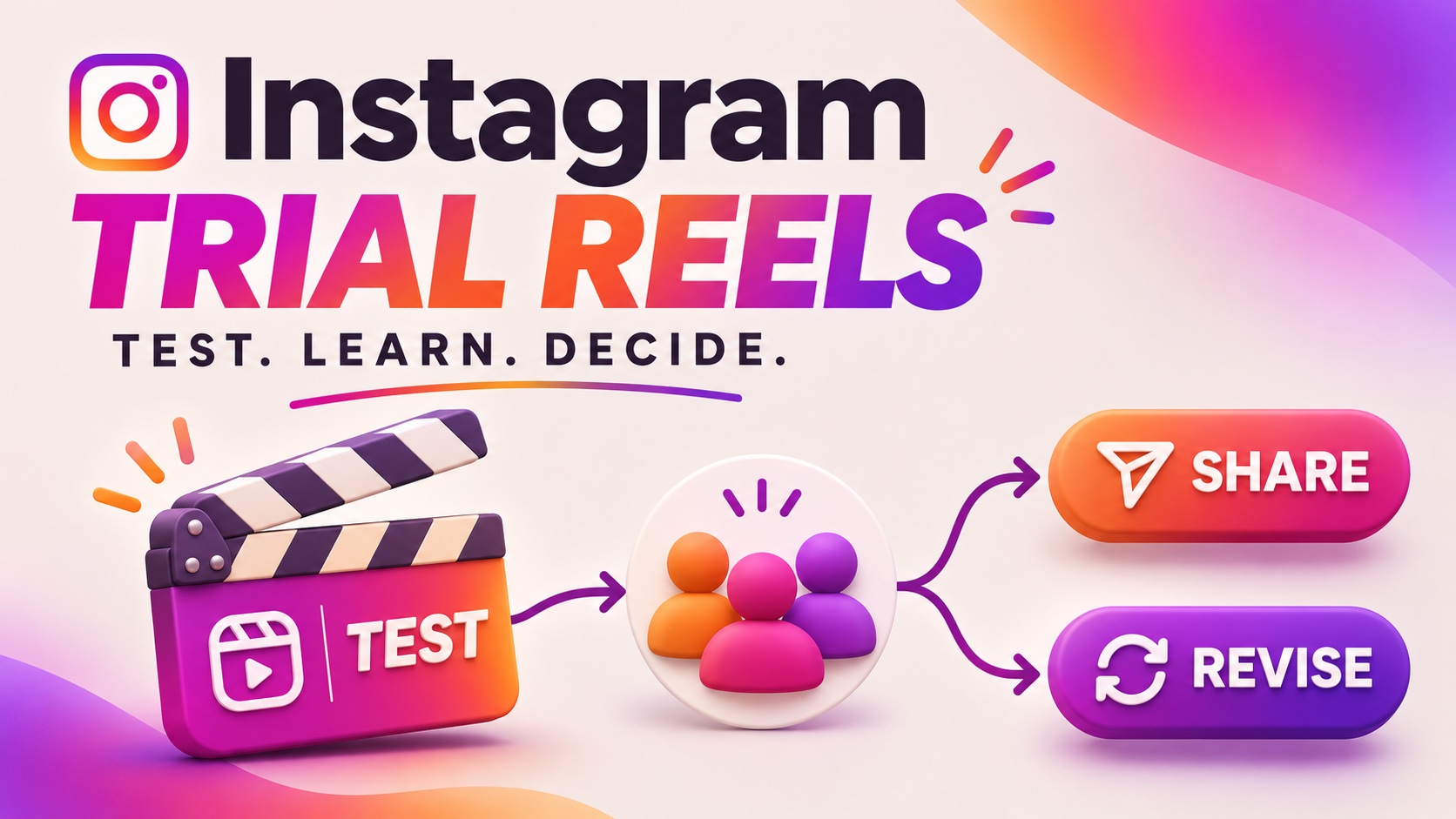
Instagram Trial Reels let you show a new video to non-followers first, then decide whether to share it with your existing audience. They are useful when you want to explore a different subject or presentation without immediately placing it in your followers’ feeds.
The useful part is the feedback. A trial can reveal that an opening needs context, a demonstration skips an important step, or a new topic deserves another video. Start with a question you can act on. “Will this go viral?” does not tell you what to change tomorrow.
Check access before planning the experiment
Instagram’s current eligibility guidance requires a public account and eligibility for recommendations. Professional accounts need at least 200 followers; personal accounts need at least 1,000. Check Account Status if access is missing, and use the current Help Center rather than an older eligibility checklist.
Make a new Reel, choose Trial before sharing, then continue through Next and Share. Instagram says reused content may receive limited reach when detected. Prepare a fresh piece that answers your question instead of repeatedly uploading an old hit.
Trials are not private previews. Followers normally will not see them in their feed or Reels, but someone could encounter one through a direct message or another surface. Keep confidential products, unapproved client material and unfinished claims out of the video.
Choose a question that changes your next edit
Suppose a pottery teacher wants to reach beginners. Her usual videos show a finished bowl, but newcomers may need to see a basic technique first. A useful question is: “Can someone unfamiliar with wheel throwing understand this centering demonstration?”
She creates a short explanation showing the hand position, the movement and the result. The video names the task immediately. It does not open with an unexplained studio montage that existing followers might recognize but a newcomer would not.
Before posting, she writes down what she hopes to learn: whether viewers understand which hand applies pressure, and whether the finished shape is visible. Those questions give comments a purpose. “Looks great” is encouraging; “Which hand is pushing?” identifies a specific missing explanation.
You can use the same approach for a product demonstration, a software tip or a service explainer. Choose one uncertainty. Changing the topic, length, narration and audience promise together makes the result harder to interpret.
Keep a short observation log
Record the video’s premise before looking at performance. A note with these fields is enough:
- Question: What should this trial help you decide?
- Creative choice: What did you change or introduce?
- Review time: When will you inspect the feedback?
- Observed response: What do the available insights and comments show?
- Next action: Share, revise, or gather more information?
Meta’s introduction to Trial Reels describes views, likes, comments and shares as early feedback. Instagram’s current help says insights appear within 24 hours. Give the video time to find viewers, then record what is actually available on your account.
Use the same elapsed time when reviewing comparable trials. Looking at one after a few hours and another after several days can make a simple exposure difference look like a creative breakthrough.
Allow an inconclusive result
A larger view count tells you that more viewing activity occurred. It does not, by itself, prove that viewers understood the message or want your offer. Read the responses beside the numbers, and keep the original question in view.
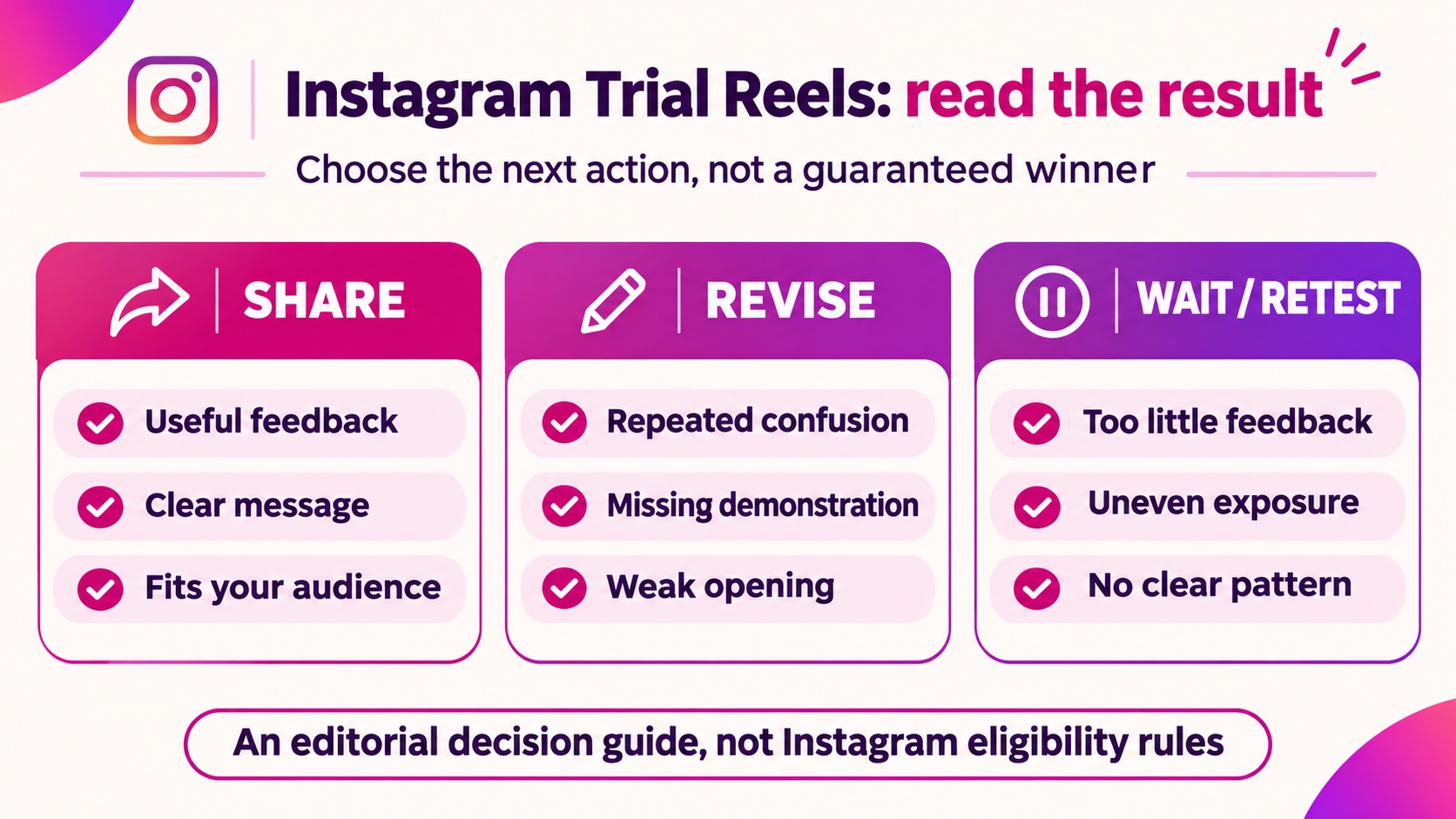
For the pottery teacher, repeated questions about hand placement suggest a closer camera angle. Questions about the next lesson suggest a possible follow-up. Silence after limited exposure does not establish that beginners dislike pottery tutorials.
Write “not enough information” when that is the honest result. Trial Reels are not a controlled experiment that guarantees equal audiences, equal exposure or a statistically certain winner. A useful observation can guide another edit without becoming a universal rule.
Keep a copy of the original question beside your conclusion. If you started by testing whether the instruction was clear but end by celebrating a handful of likes, you have changed the question halfway through. You can appreciate that response while still admitting that the teaching question needs another look before drawing a firm conclusion.
Avoid comparing a trial directly with a regular Reel as though they reached the same audience. Existing followers already know your work. For a newcomer, your opening may have to explain something that a familiar viewer takes for granted.
Choose how the Reel reaches followers
For manual sharing, open the trial from your profile’s Reels area, view its insights and choose Share to everyone. Review the actual video first: does the caption still make sense, is the information current, and does the content fit the audience you have built?
Instagram also offers automatic sharing when a trial performs well based on signals such as views and engagement. Check Trial settings before posting. The current help page says this choice carries over to future trials until you change it.
Manual review is useful when a teammate must approve the final message or a product launch has a specific date. Automatic sharing can suit content you are already comfortable distributing more broadly. Make the choice deliberately rather than discovering it after the Reel appears.
Separate the trial from later promotion
Once you have chosen and publicly shared a Reel, you may want to support its visible engagement. If you are considering whether to buy Instagram Reel likes, Boost Social Media lets you select eligible public Reels for a likes package.
Save the trial observations first. Keep later promotional activity separate in your notes so you do not mistake a changed like count for the original test response. A likes service supports that visible metric; your explanation, demonstration and audience fit still need their own review.
For the next trial, carry forward one lesson. The pottery teacher might film a closer hand position while keeping the teaching goal unchanged. That creates a practical learning sequence: identify the confusion, make a clearer version, and see whether the next group of viewers understands it.