
How to Duet on TikTok: Steps, Sound and Useful Ideas
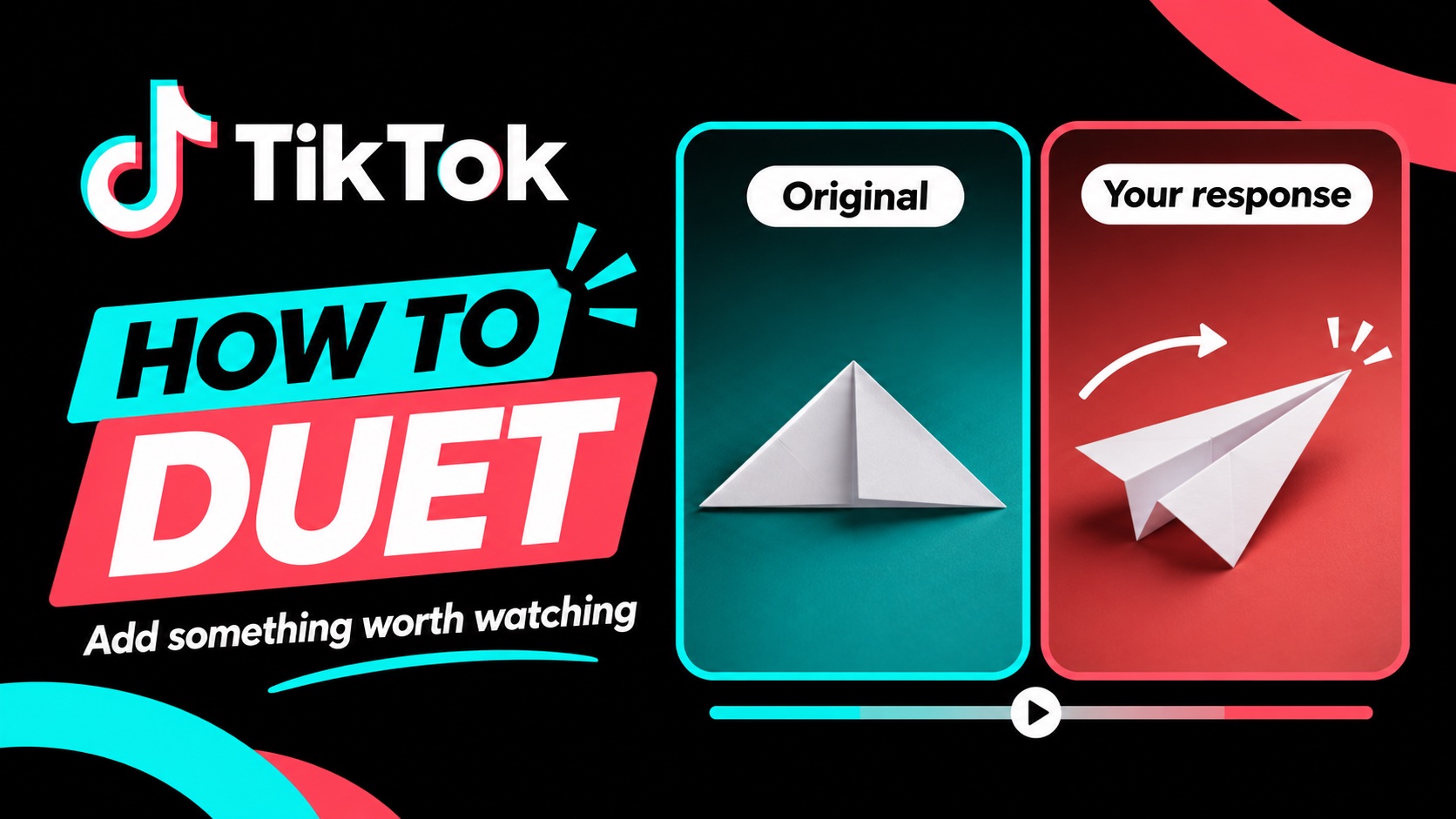
To Duet on TikTok, open an eligible video, tap Share, and choose Duet. Record your response alongside the original, edit the result, then post it or save a draft. Both videos play together, so the format works particularly well when viewers need to see an action and your explanation at the same time.
The button is the easy part. A useful Duet gives people something they would miss by watching the original alone: another angle, a demonstration, a thoughtful response, or a performance that complements it. Decide what you will contribute before recording.
Record your first Duet
Follow TikTok’s current Duet instructions:
- Tap Share beside the original video.
- Find Duet in the bottom row; swipe through the options if necessary.
- Set up any camera tools you want, then record your contribution.
- Tap Continue, review the edit, and add helpful text or other finishing touches.
- Choose Next, check the description and privacy options, then select Post or Drafts.
Use a draft for the first attempt. It gives you time to check whether your explanation matches the moment viewers are seeing, without rushing to publish a confusing version.
Choose a video you can add something to
Watch the source from beginning to end. Read its caption before deciding that something needs correcting. A creator may explain the apparent mistake a few seconds later, or the caption may supply an important condition.
Then finish this sentence privately: “My side of the screen will help someone understand…” If the answer is only that you agree, consider whether a comment would communicate it more clearly. A Duet earns its space when the second picture or voice changes what the audience can learn or enjoy.
A demonstration is a good starting point. You might show the reverse side of a craft project, compare two ways of holding a tool, or add a harmony to an open musical invitation. Choose something you can demonstrate honestly rather than acting out expertise you do not have.
Plan the response around a visible moment
Imagine an original paper-folding tutorial that moves quickly past a crease. Your Duet could show the same fold from above, making the alignment easier to see. The value is that missing view, not a general claim that your method is better.
Make a short cue sheet before recording:
- Source moment: The creator brings two corners together.
- Your contribution: Show those corners close to the camera and indicate the edge that should line up.
- Spoken explanation: “Check this edge before pressing the crease. If it slips, reopen the fold and align it again.”
- Takeaway: The viewer can identify what to check during their next attempt.
This hypothetical example does not need a long introduction. Rehearse your explanation with the source playing so your gesture arrives at the relevant point. A well-timed sentence is easier to follow than continuous narration that competes with every word of the original.
For a reaction or performance, use the same planning principle: identify the moment that calls for your response and leave the surrounding material room to breathe.
Make both sides understandable
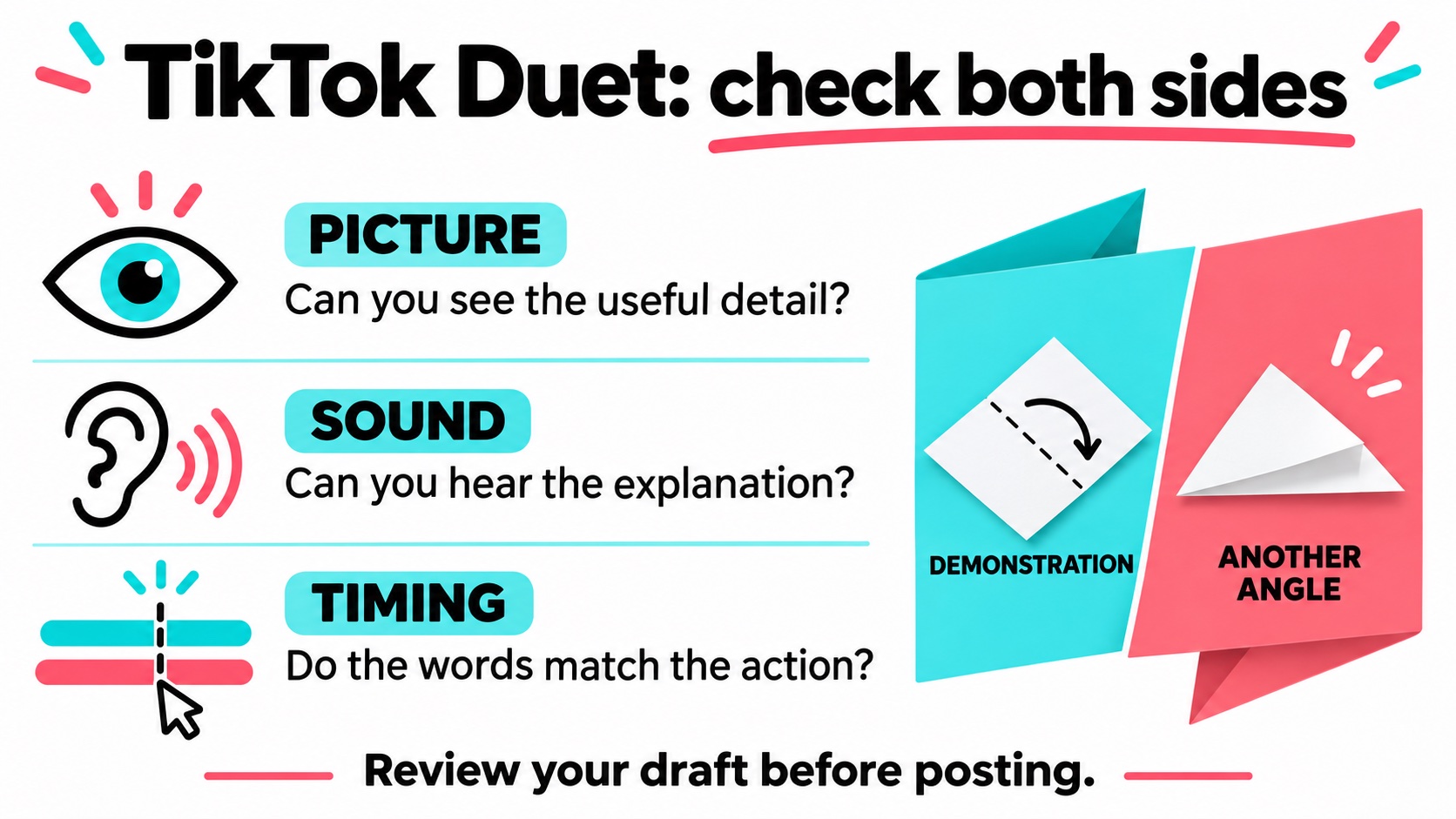
Record a brief test before attempting the whole video. Listen to the playback with headphones and through the phone speaker. Confirm that the audio you intended to record is actually present; do not assume that seeing yourself on screen means your voice was captured.
If your version offers a microphone control, check its state before recording. If the test is silent, review the app’s microphone permission and recording controls. Then make another short test. Adding louder background music will not repair missing speech.
When two voices overlap, simplify your commentary or move it into a pause. Use brief text to identify an important detail, but keep it away from the action. View the draft at normal phone size and check whether a person can follow both panels without repeatedly stopping.
Review the draft in three passes. First, watch without sound and check where your eyes go. Second, listen without watching and check whether the explanation makes sense. Finally, watch normally and look for a moment when the two sides contradict each other. Fix that moment before adding decorations. If you need several sentences to explain why a gesture appears late, recording a cleaner take is usually easier for the viewer than adding another layer of text over the existing edit.
What if the Duet option is missing?
Not every video allows Duets. The original creator’s permissions matter, and TikTok applies additional settings to teen accounts. Check the Duet privacy guidance and your account settings rather than assuming the app is broken.
Choose another eligible source or ask the creator whether they want to enable collaboration. Downloading and rebuilding their video to get around a disabled option does not solve the permission issue.
If you want others to Duet your own videos, TikTok requires a public account and appropriate Duet permissions. Review those settings intentionally, especially before inviting responses from people you do not already know.
Give someone a reason to share the finished video
A practical Duet is easier to recommend when its benefit is obvious. “The close-up shows where the fold should meet” tells a viewer more than “Watch this amazing trick.” Describe the useful detail in the caption and acknowledge the original creator’s contribution.
For a business, the next step might be a related tutorial that answers a common customer question. Keep that invitation relevant to the demonstration. Avoid turning the final seconds into a list of unrelated requests.
If you plan to buy TikTok shares, choose the finished public video after these checks. The service is tied to that video; it does not create your explanation or establish whether viewers found it useful. Clear content gives people a reason to pass it along and gives you a better basis for judging their responses.
After posting, read the questions that arrive. If several viewers misunderstand the same step, use that feedback to make a clearer follow-up. Keep the useful exchange going with an explanation people can act on.