
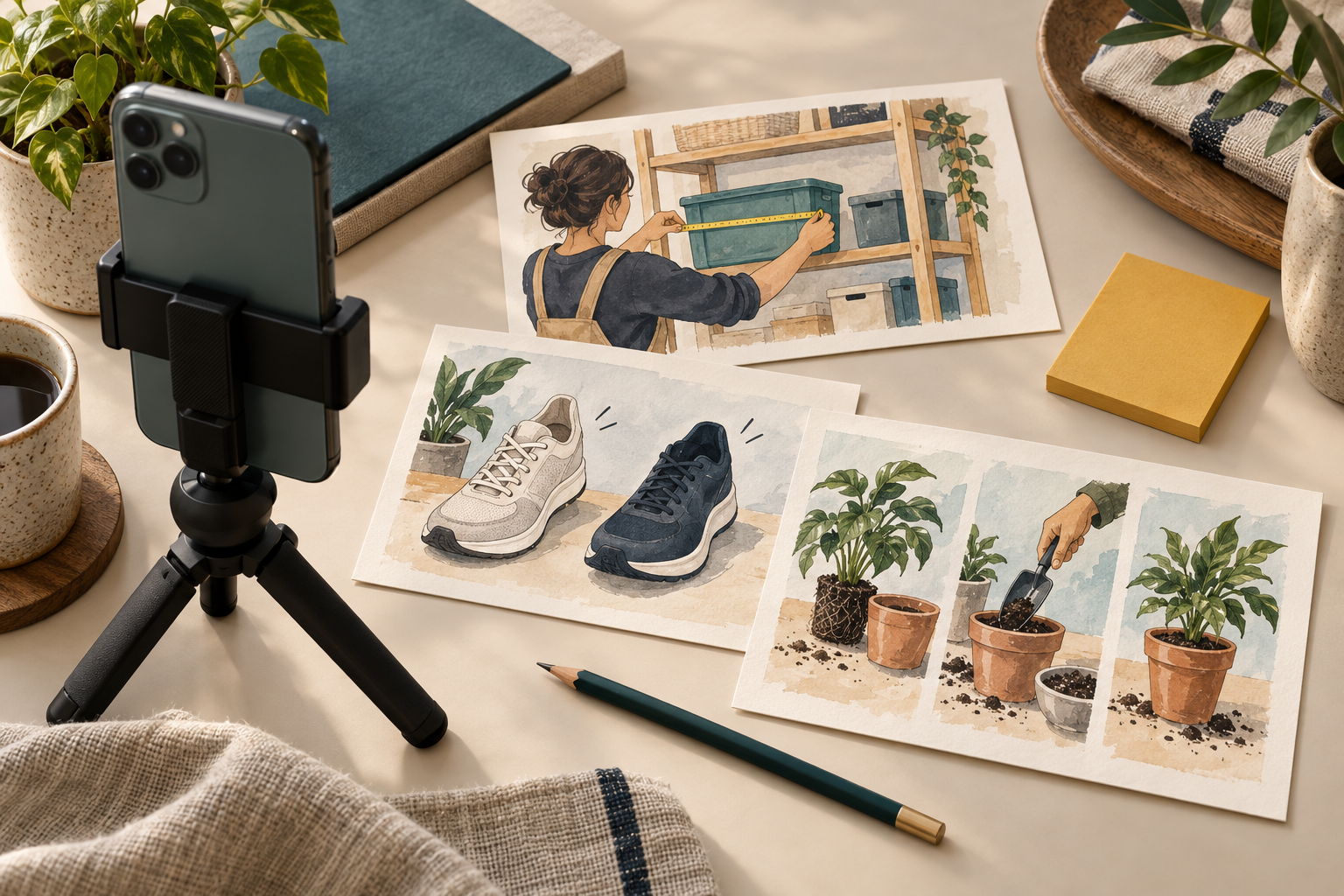
You have something worth showing, a phone ready to record and no clear idea for your next post. Start with a question your viewer might ask while shopping, learning or making something. The answer gives you both a subject and a reason to film it.
These eight TikTok video ideas turn that approach into specific shoots. Adapt the hypothetical examples to your own work. Each gives you an opening, a sequence to record and something useful for the viewer to take away.
1. Show what fits inside
A bag maker could open with an empty tote beside the items someone carries to work: “Will your everyday kit fit in this bag?” Film from above as you pack it, keeping the whole opening visible.
Include the awkward part. Show whether the laptop slides past the closure and whether you can reach the keys without unpacking everything. Name the laptop size and bag model in the caption. Viewers leave with a concrete comparison they can make against their own belongings.
2. Film a check people can repeat at home
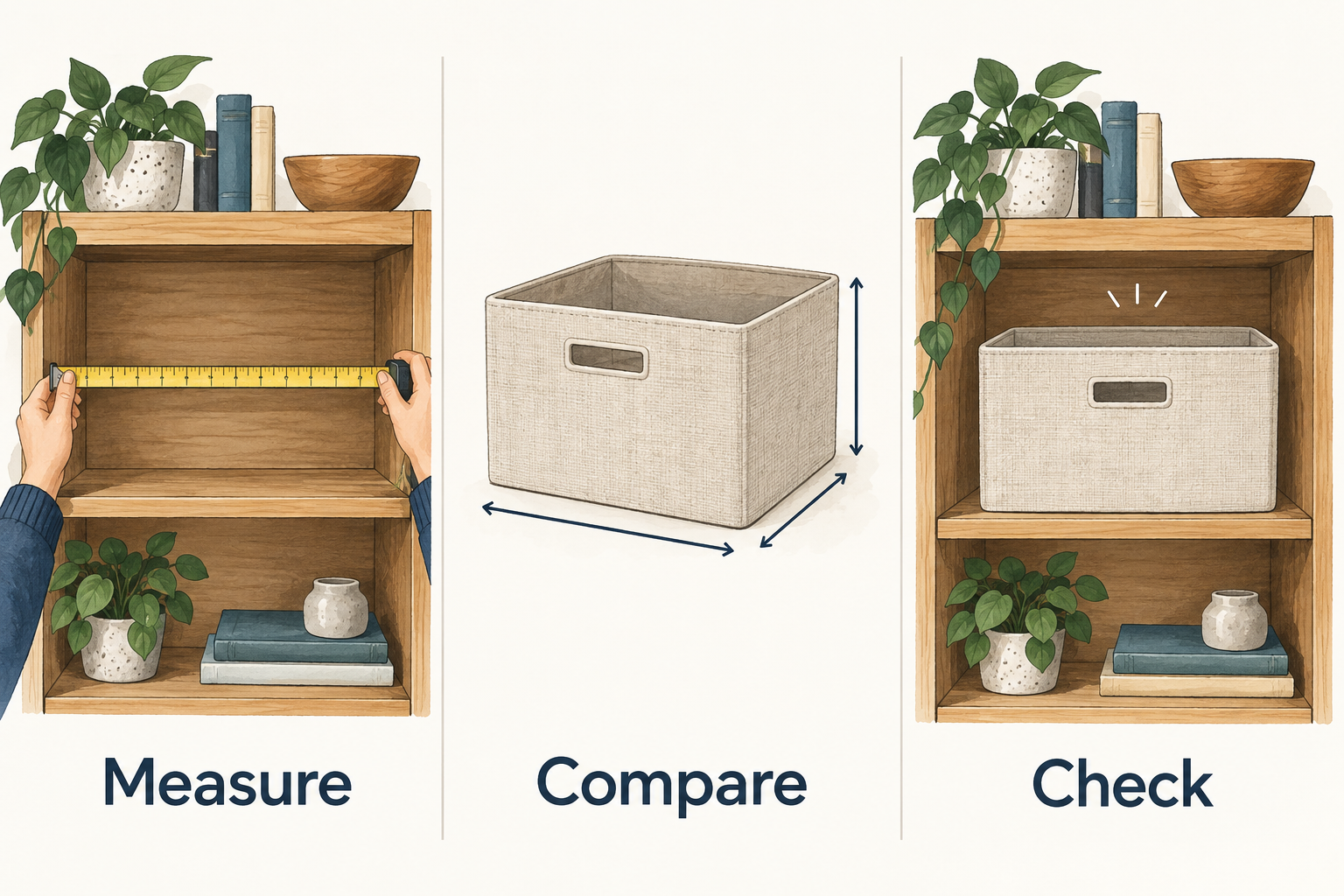
For a home goods shop, try “Measure your shelf before buying storage bins.” Show the shelf’s usable width, depth and height, with the tape measure and its starting point visible together.
Compare those measurements with the bin, then slide it into place. Check the clearance needed to pull it out or lift its lid. Finish with a labeled frame that viewers can pause while measuring their own shelves. The video answers a buying question and gives someone a reason to save it for a later task.
3. Explain a creative choice
An illustrator could put two versions of a book cover on screen and open with, “Same drawing, different focal point.” Change one element, such as the title’s position, while keeping the artwork unchanged.
Record the adjustment, then show both versions at the size someone would see on a phone. Explain which version you prefer and point to the detail behind that choice. This lets viewers follow your judgment instead of watching an unexplained time lapse. Ask which part they noticed first if you want feedback on the comparison.
4. Show what changes the price
A bakery could compare a plain celebration cake with a decorated version: “What changes when you add this design?” Record the extra work, from preparing the decoration to placing it on the cake.
Keep the explanation tied to that order. If you mention time or prices, use your actual records and current rates. You can also discuss the work without displaying a price. The payoff is understanding: a customer sees which choices affect preparation and can describe what they want more clearly when ordering.
5. Fix one filming problem on camera
A creator filming handmade jewelry could open with the problem visible: “The reflection is hiding this pendant.” Keep the phone fixed while you move the light or change the object’s angle.
Show the adjustments and keep the comparison honest by leaving the exposure and edit consistent. Explain which setup makes the detail easiest to see in your test. End on that view, with a wider shot showing where the light sits. Another maker can then try the arrangement with their own equipment, rather than guessing how you achieved the result.
6. Walk through a first visit
A pottery studio could film the route from its entrance to the workshop table: “Coming to your first class? Here is where to start.” Show the actual entrance, where to check in and where beginners put their belongings.
Use short labels for each stop and keep unrelated customers out of the frame. Mention anything visitors genuinely need to bring, based on the class being shown. Finish at a prepared place at the table. This gives someone unfamiliar with the studio a picture of what arriving will feel like.
7. Compare two options in the same test
A stationery creator could ask, “Which notebook would you choose for this pen?” Write the same short sample on two pages, then show the reverse of each sheet.
Name the pen and notebooks so viewers can interpret the comparison. Keep the lighting, writing pressure and camera distance as consistent as you can. Show the outcome before explaining your preference. A narrow, visible test helps people judge one feature they care about; you do not need to declare one product the winner for every use.
8. Turn a leftover into something useful
A gift shop could start with a small piece of wrapping paper beside a finished gift tag: “This offcut is enough for a matching tag.” Film the cut, fold and attachment from directly above.
Leave the tricky fold in the edit long enough to follow. Show the back as well as the finished front, and include the starting dimensions in the caption. The viewer gets a project to try with material they already have. A second version using a different paper shape can become a follow-up.
Choose your first video
Pick the idea you can demonstrate clearly with what you have today. Write the opening and final shot before filming. Check the edit on your phone with the sound off, then correct captions, labels and any measurements.
Record a wider shot of your setup before moving in for details. It gives viewers enough context to understand the closeups. Keep the same product names in the video and caption, and describe the subject plainly on the cover. A recognizable cover also helps someone find the right post when several videos on your profile look similar.
For more subjects, TikTok’s Creator Search Insights can surface frequently searched topics and content gaps where the tool is available. Choose a relevant question you can answer from your own work.
If a reference video becomes part of a promotion, you can buy TikTok saves for the selected public post. Keep that activity separate when reviewing audience response. The filming brief still comes first: give someone an answer they can use, then let their questions suggest what to make next.