
8 Instagram Poll Questions for Better Customer Feedback
The most useful Instagram poll questions help you make a decision. A tea shop can ask which flavor customers want to sample. A consultant can find out which part of a service needs explaining. Each answer gives the next Story a purpose.
Start with something you can act on this week. The eight examples below include short answer choices, something to show behind the poll, and a follow-up that makes voting worthwhile. They are hypothetical business scenarios, ready to adapt.
Set up a poll people can answer
Instagram’s sticker instructions explain how to add a Poll sticker to a photo or video in your Story. Write your question, customize the answers, and publish. Viewers can vote and see results; you can swipe up on your Story to see votes, including how each person voted. Sticker availability can vary.
Keep the question about one decision. Show the products, explain the situation, or provide the missing detail before asking. Choose answers that both sound reasonable: “Love it” versus “Absolutely love it” leaves no room for disagreement.
Check each answer on a phone before posting. A label that makes sense in your notes can be confusing over a busy photograph. Use familiar words, clear color contrast, and matching levels of detail. If one answer describes a benefit and the other describes a drawback, rewrite them so the comparison is fair.
8 Instagram poll questions to try
1. Which sample would you try?
Answers: Citrus / Mint
A tea shop could photograph two labeled teas before planning a tasting. Mention that these are the possible samples for Saturday, so the choice has context. Use the result to decide which flavor to demonstrate first. Then share a brewing tip for that tea, giving voters something useful after their tap.
2. Which finish fits your kitchen?
Answers: Speckled / Solid
For a ceramics studio, photograph the same mug in two finishes under similar lighting. Keeping the shape and angle consistent makes the comparison easier. Follow with a close-up of the preferred finish and describe its appearance. Keep other production decisions separate; a finish vote does not tell you which mug size people need.
3. Which guide should I make next?
Answers: Invoice setup / Receipt storage
An accountant creating educational content can use this question to choose a tutorial. Show the two topics as simple written labels. Publish a short walkthrough for the selected topic, then save the other idea for later. This gives followers a clear connection between answering your question and receiving something they asked for.
4. Which workshop time could you attend?
Answers: Saturday 10am / Sunday 2pm
A yoga studio should put the full dates, time zone, class length, and location on the Story before asking. Those details matter for an international audience. Use the answers to narrow the schedule, then share registration information. Attendance votes help with planning, but confirmed registrations are a stronger basis for staffing decisions.
5. When would pickup be easier?
Answers: Before work / After work
A bakery considering pickup hours can show the exact proposed windows above its poll. Ask customers who collect orders locally to answer. If one window attracts interest, explain when you will test it and how customers can order. Review actual pickups during the trial before making the hours permanent.
6. What would you like to see closer?
Answers: Light settings / Desk footprint
A shop selling desk lamps can show the product in a real workspace, then ask which detail needs a demonstration. Follow the vote with either a lighting comparison or a view showing how much desk space the base uses. This question helps choose useful product content without assuming every viewer is ready to buy.
7. What needs a clearer explanation?
Answers: What’s included / How billing works
A consultant can ask this after introducing a service package. Show a brief description first, so people know which offer you mean. Answer the selected question in plain language on the next Story. If followers still have questions, invite replies separately; a two-choice poll cannot capture every concern.
8. Which process should we show?
Answers: Packing orders / Testing products
A small retailer can use this to plan behind-the-scenes content it can actually film. Show a glimpse of both activities before asking. Record the selected process and explain one detail viewers might otherwise miss, such as how you check fragile items before packing. Keep customer information out of the footage.
Read the answers before changing your plans
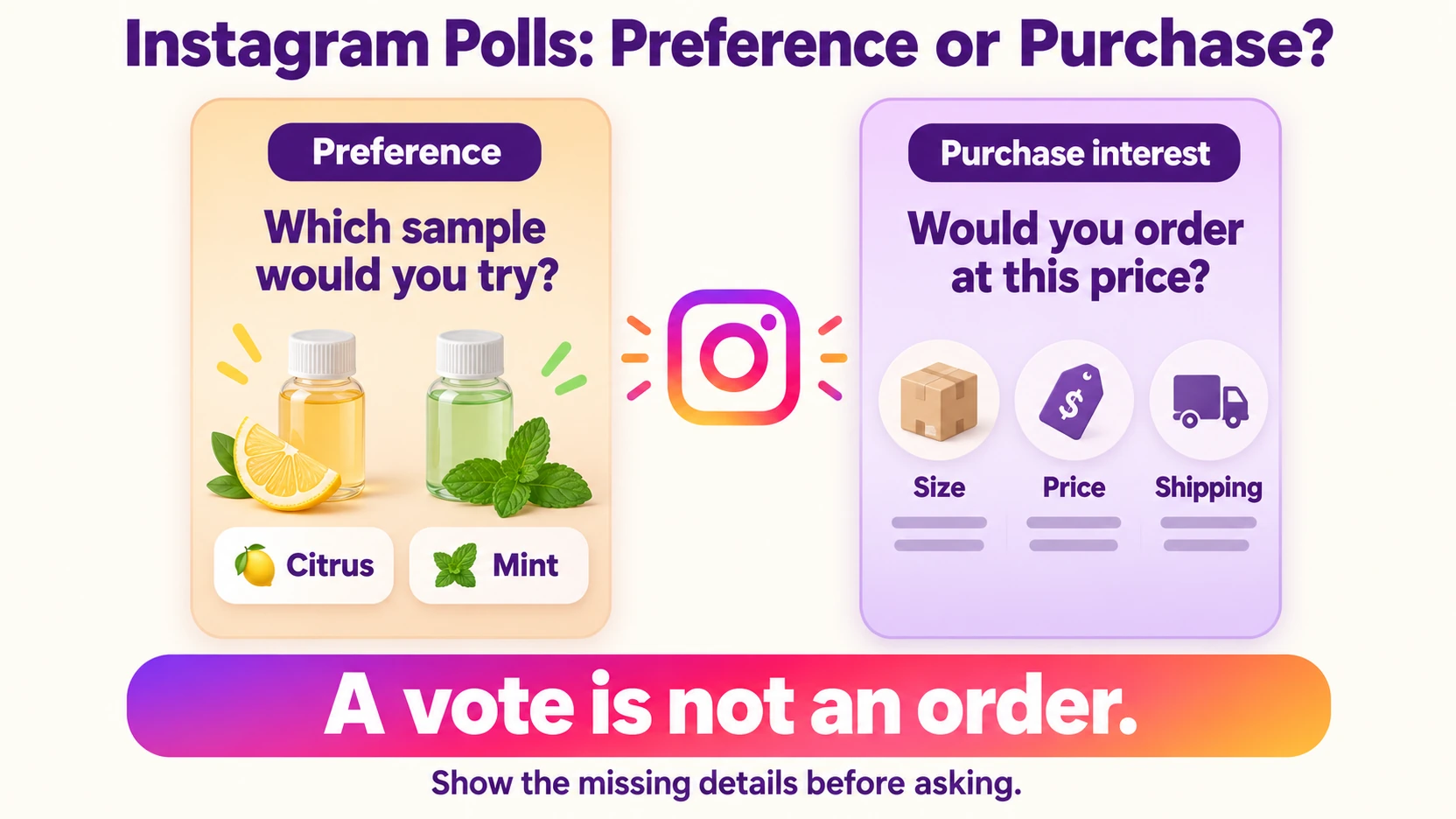
Return to the tea example. “Which sample would you try?” measures a flavor preference among people who voted. It does not establish demand for a full-sized tin.
A separate question, “Would you order at this price?”, needs a separate Story showing the size, price, and shipping information. Even then, a yes vote expresses interest. An order is a different action. Keeping those steps distinct helps you decide whether to prepare another demonstration, clarify an offer, or test a small batch.
Record the wording, options, vote counts, and what you did afterward. Counts matter alongside percentages: a strong percentage from very few votes can still give you little information. Your respondents are the people who saw the Story and chose to answer, not a representative sample of every potential customer.
Compare answers from similar situations when you repeat a question. A poll shown during a sale may attract different responses from one posted during an ordinary week. Note the context alongside the result, so you remember what people were actually responding to.
Give a useful poll a clear next step
Prepare the question before promoting the Story. If increasing the view count on an active public Story is part of that plan, you can buy Instagram story views through Boost Social Media. The service supports that visibility goal; poll votes, replies, and purchases are separate outcomes.
Judge the question by what you learn and do next. Share a useful response to the result, then watch whether people request details, register, or place an order. Start with one question you can follow through on.